
Kayaking Chile’s Río Claro
Located outside of Molina in the Maule region of Central Chile, the Río Claro is one of the country’s most recognizable rivers. Its canyons form a deep incision into the surrounding terrain and the various sections of the river are abundant with picture-perfect drops. For paddlers coming to Chile in the spring-time, stopping by the Claro is a must. It is the finale of our guided Class IV spring road trip.
The Basics
From Santiago, it is about four hours of driving south to get to the Claro. The sections of river are located with the Radal Siete Tazas national park. The park is open Tuesday through Sunday and closed on Mondays. Kayaking is permitted on many sections of the river and paddlers should be kind and respect the regulations of the park to ensure future access to the Claro and other rivers within national parks across Chile. To paddle at the Claro, you must purchase a daily park pass online and present to park staff. On our guided trips, we handle the necessary permits. Depending on the day, the park staff may lightly clean the kayaking gear.
The river is in a mountainous are less than an hour outside of Molina, a larger town. In the immediate vicinity of the river, there are various campgrounds, cabins, bathrooms, cell service, and even a food truck.
The Season
Spring run-off and, to a lesser extent, rainfall determine the water level on the Claro. The best time to paddle the Claro is during the spring from September until it drops out, normally in late November or December. There is an online gage on the website of the Ministerio de Obras Públicas though flows are determined visually or based on info from other paddlers. We are always happy to answer any questions about the river or water levels.
The Sections
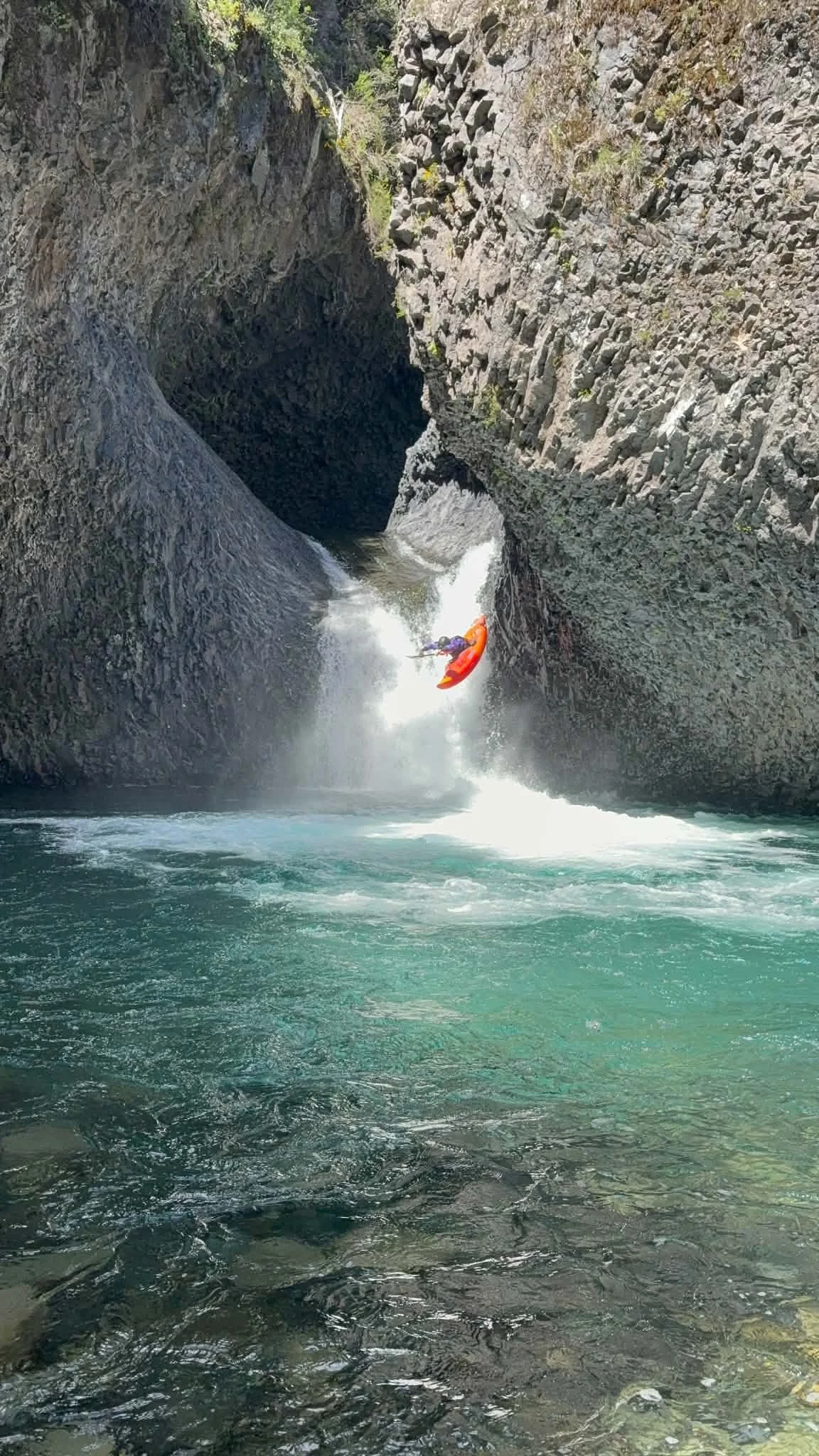
22 Saltos
22 Saltos or 22 waterfalls is the uppermost of the commonly run sections of the Río Claro. It is a solid Class IV/IV+ canyon stacked with, as the name implies, 22 distinct waterfalls. Traditionally paddlers hike in but it is possible to get permission to drive a vehicle to the put-in. The tallest drops are toward the beginning of the section and most of the rapids cannot be scouted. This section has no portages but we recommend going with someone who has paddled it before for the first time.
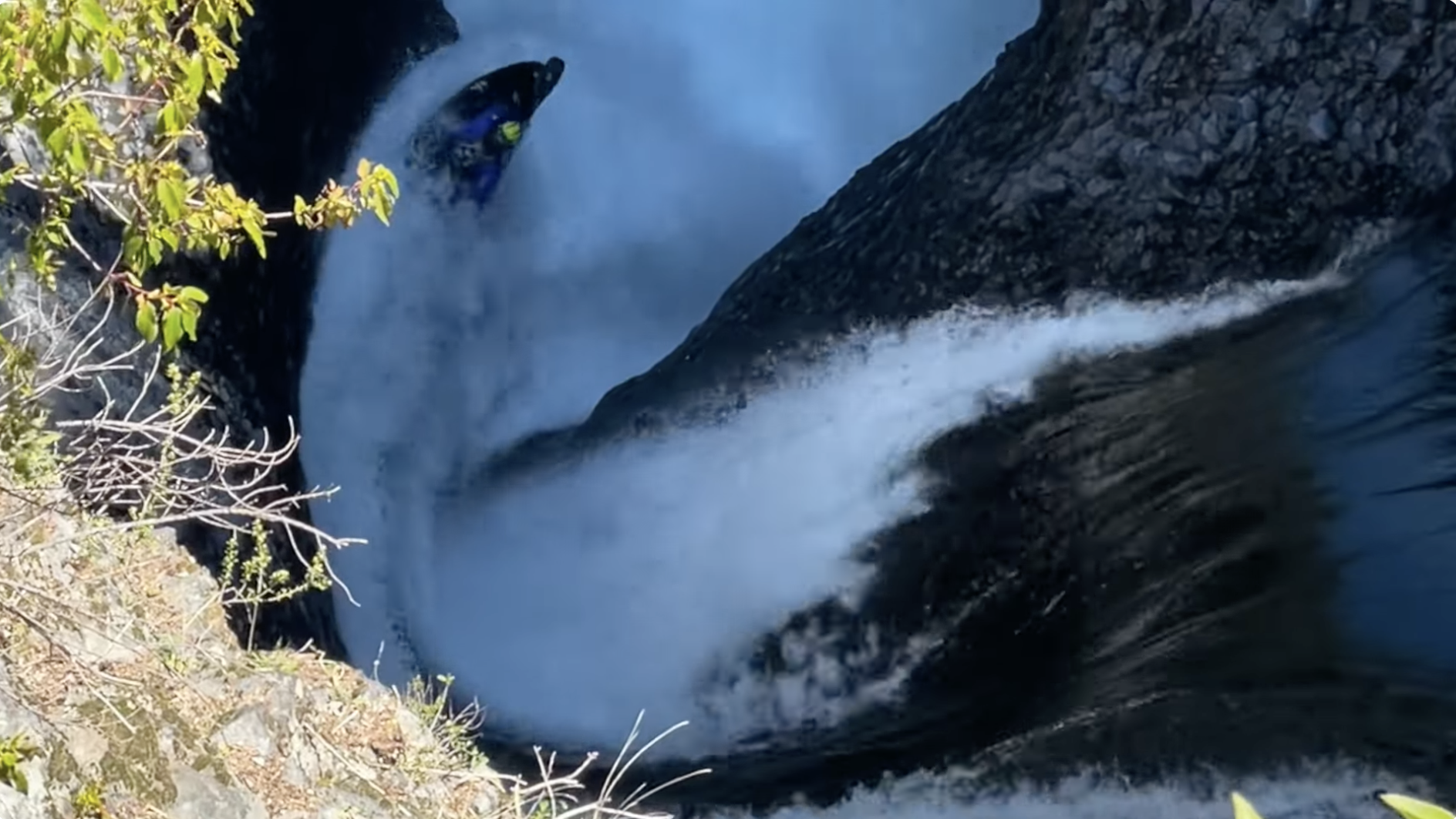
Garganta del Diablo
Garganta del Diablo or “The Throat of the Devil” is the most famous section of the Río Claro with its iconic curving caracol waterfall (pictured hear) and the extremely narrow and unique rapids that follow. It is a committing Class V canyon. The lines are clean and relatively simple but there are undercut walls and rescues are difficult. We do not paddle this section on guided trips and recommend that paddlers run this section by their own account after careful consideration.
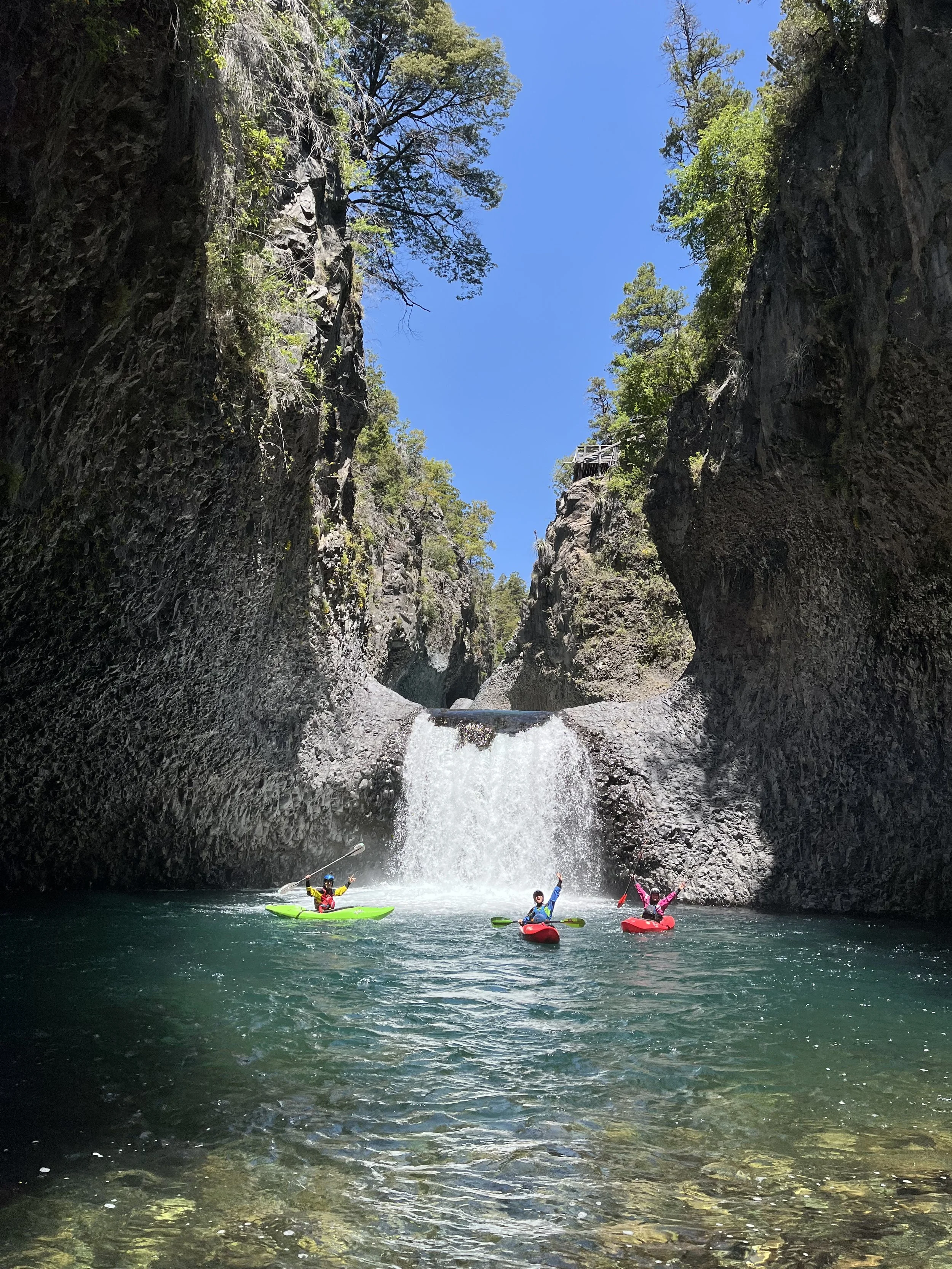
Siete Tazas
Siete Tazas or “Seven Teacups” is the most approachable section of the Río Claro. It consists of seven small waterfalls, all with clean approaches and landings, perfect for practicing “boofing” and waterfall technique. This section is accessed at the park entrance and requires mild rope-work to get in and out. There are ample viewpoints all around the waterfalls and scouting is simple. The Seven Teacups are a quintessential stop on our trip.
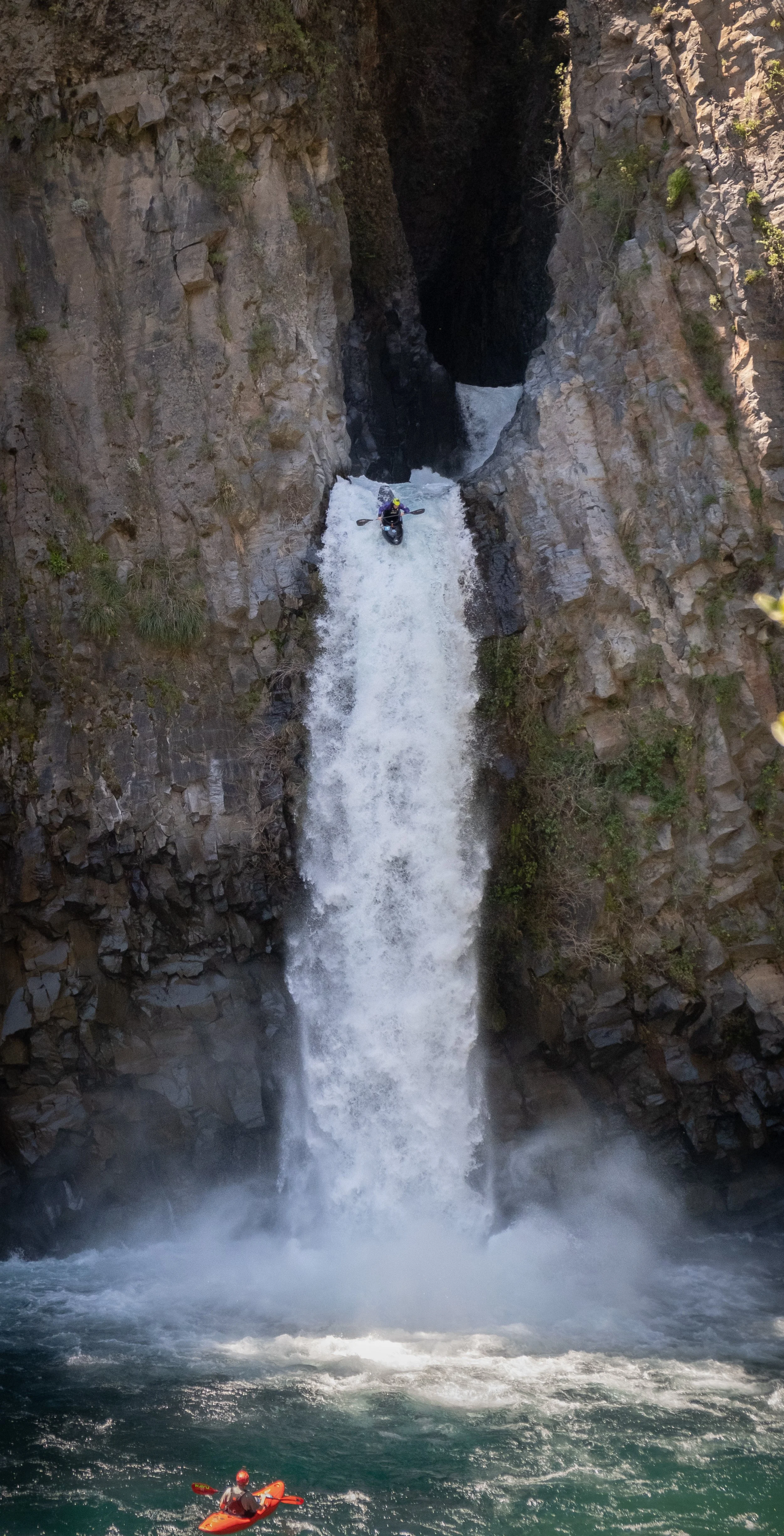
La Leona
La Leona or “The Lioness” is the end of the Río Claro’s canyons. The ~80 foot (24 meter) waterfall spills out of the canyon walls after a complicated lead-in. After its first descent in 2018 La Leona is considered to be one of the most stand-out and technical waterfalls in the sport.
Photo: Chile Kayak Adventures Guide and Co-founder Axel Hovorka coming over the lips
We are always happy to advise fellow kayakers hoping to paddle in Chile. Feel free to reach out to us via our website or social media with any questions or explore our trips to learn more about our guided experiences across the country